In recent years, the world has been swept by a series of massive natural and climatic disasters, leaving behind devastating impacts that extend to lives and properties, shaking the foundations of local communities, making us understand more and more the fragility of our lives in the face of these sweeping natural forces!
In 2023, the Arab countries experienced unforgettable sad experiences, including devastating earthquakes in Syria and Turkey during the winter season, a massive hurricane in Libya, and another devastating earthquake in Morocco towards the end of the year.
What is the role of our donations then? And how do we contribute through them to help those affected by these disasters and alleviate their shock and suffering?
Here are the top 10 paths where your donation for earthquake and natural disaster victims flows.
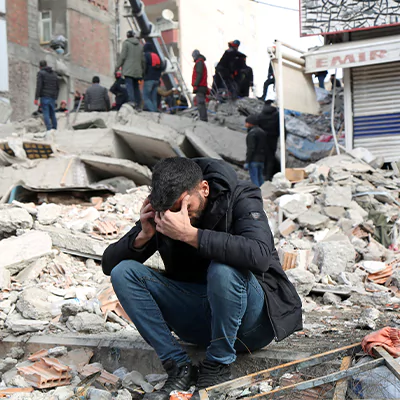
10 Main Aid Categories After Earthquakes
In this section, we will discuss the various pathways your donations for earthquake and natural disaster victims take. We will explore how your contributions are utilized to provide immediate relief, rebuild infrastructure, and ensure the well-being of those affected by these devastating events.
First: Immediate Relief Efforts
Immediate relief efforts are crucial in the aftermath of earthquakes and natural disasters, as they provide timely and lifesaving assistance to affected individuals and communities. These efforts encompass a range of essential services, including:
1- Emergency Medical Aid
Emergency medical relief requires an urgent and costly response. Therefore, your modest donation can enable relief teams to save hundreds of lives from death within minutes, while lack of funding or equipment may lead to the death of hundreds of others!
An important part of your donation goes towards setting up and funding field hospitals, which are among the most important efforts made by various countries and charitable organizations to save the injured and treat their wounds, such as providing ambulances, first aid supplies like bandages and medical tools and medicines, in addition to anesthesia and surgery supplies like antibiotics, surgical tools, and prosthetic limbs for the injured.
Examples:
- The Jordanian Arab Army provided relief to the people of Syria and Turkey following the February 2023 earthquake by setting up a military field hospital consisting of 108 staff members, including doctors, nurses, and administrators. It can accommodate 24 beds and contains an operating room, laboratories, an intensive care unit, a pharmacy, and multiple medical specialties.
- The World Health Organization sent 72 tons of essential medical supplies to Syria and Turkey after the earthquake.
2- Providing Shelter and Temporary Housing
During earthquakes, many families find themselves homeless, forcing them to live on the streets or in dilapidated or earthquake-surviving houses. At this time, these families are in dire need of shelters and temporary housing. Therefore, relief agencies and charities allocate a significant portion of donations to equipping shelters, tents, and mobile homes.
Example:
During the Turkey and Syria earthquake, many organizations and countries, with the efforts of the United Nations and the World Food Program, provided immediate relief by donating blankets, mattresses, tents, shelter materials, as well as essential relief items and solar lamps with the help of donors.
Second: Infrastructure and Reconstruction
Infrastructure and reconstruction aid encompasses efforts to repair and restore vital infrastructure, such as roads, bridges, schools, hospitals, and water and sanitation systems, which have been damaged or destroyed by earthquakes and natural disasters. Here are the focus areas in detail:
3- Repairing Roads and Transportation
It is obvious that infrastructure and roads are among the most affected by earthquakes and floods. Therefore, they receive a significant share of attention and funding after disasters. The importance of this item stems from the vital role of roads in connecting affected cities with their surroundings and delivering aid, transporting the injured, and other matters that can only be done through paved roads.
Examples of the extent of damage to roads and infrastructure in affected countries:
A. Syria Earthquake:
- The February 2023 earthquake in northern Syria caused significant damage to infrastructure and sewage networks, leading to water pollution and increased fear of a cholera outbreak.
- Civil defense teams tried to rehabilitate the infrastructure and sewage networks, assisted by the aid and donations they received, as well as necessary tools.
B. Libya Hurricane:
- The hurricane caused the destruction of 70% of the infrastructure in the affected areas.
- 80% of water crossings in all cities and villages in the eastern region collapsed.
- 50% of public roads in the areas affected by the hurricane and flood were damaged.
- Approximately 2,200 buildings in Derna were damaged due to the floods caused by the hurricane in Libya.
- The agricultural sector and livestock deteriorated due to the erosion of vast areas of land.
C. Morocco Earthquake:
- The village of Tilat Nayacoub was destroyed because it was located at the epicenter of the earthquake, where the earthquake leveled the village’s houses and roads to the ground.
- The authorities used heavy machinery and vehicles to remove large rocks and boulders that had fallen from mountaintops due to the violent shaking, in order to open roads and allow relief and aid to reach the destroyed villages.
4- Rebuilding Schools and Educational Centers
Approximately 37 million children have their education disrupted each year due to the destruction or damage of schools after natural disasters, so protecting children and reintegrating them into schools is vital.
Donations contribute to rebuilding schools and educational centers, as charitable institutions like Medics and other organizations around the world, such as UNICEF, Doctors Without Borders, the International Rescue Committee, and Save the Children.
Examples of how donations help with rebuilding schools:
A. Reviving Schools After the Haiti 2010 Earthquake
Around 1,200 schools were destroyed after the earthquake. The emergency team at the Ministry of Education and School Engineering Directorate, with support from the World Food Program, worked tirelessly to rehabilitate 4 schools in record time, with the help of Swiss funding of $80,000 per school. The new schools also became earthquake and hurricane-resistant thanks to the engineering team’s efforts.
B. Mobile Buses to Educate Children After Their Schools Were Destroyed in the Syria 2023 Earthquake
After around 452 primary and secondary schools were affected by the earthquake, the Orange organization, with the help of various donors, initiated the “Colored Buses” project, which became mobile classrooms. Children are delighted to learn in them because they are decorated with pictures and the “Letter Train” logo. They move between the displaced camps in Jindires and its surroundings, targeting around 27 camps.
C. Tent Education for Children After the Syria 2023 Earthquake
With the help of donors, civil society organizations converted 10 tents into study areas that can accommodate around 40 students, and within just 3 months after the earthquake, many teachers volunteered to provide lessons to children in an attempt to alleviate the crisis and prevent children from being deprived of education.
Third: Food and Water Supplies
Providing food and water supplies is a critical aspect of disaster relief efforts. It aims to alleviate hunger and prevent dehydration, which can save lives and contribute to the overall well-being of those affected by natural disasters. This aid category includes:
5- Establishing Food Distribution Points
Donations to earthquake-stricken areas contribute to the relief of thousands and save them from the dangers of hunger and its pains. Charitable organizations and their volunteer teams focus on this matter by preparing and distributing food aid with the help of donors’ money from around the world.
Examples:
- The World Food Program provided food assistance to more than two million people in southern Turkey and northwest Syria, including one million people in Syria who received food aid and 380,000 who received hot meals. In Turkey, 870,000 hot meals and 100,000 family food parcels were distributed.
- The World Food Program supported the passage of 180 trucks to areas not under government control in northwest Syria, after the Turkish border that had previously supported their movement was opened.
- To ensure the continuity of the World Food Program’s activities in Syria, the program needs funding from donations worth $300 million per month to support 5.5 million people.
6- Clean Water Supplies
Water scarcity and pollution problems are exacerbated in poor countries, especially after natural disasters, making it difficult to obtain clean drinking water, and hygiene levels decrease, increasing the risk of contracting diseases like cholera in Syria.
Many organizations allocate portions of donations to implement projects that combat this issue, such as transporting water by trucks, installing water tanks and emergency water treatment plants for surface water, distributing water gallons, and purification tablets for drinking water.
- Example: More than 100,000 water bottles, thousands of sleeping mats, food cans, and hygiene kits were distributed by UNICEF and other charitable organizations after the 2023 Syria earthquake.
Fourth: Rebuilding the Individual
Providing psychological support for families of the missing, caring for children and supporting orphans are main focus areas for charity organizations after earthquakes. Here are some of the efforts your donations contribute to:
7- Psychological Support for Families of the Missing
The World Health Organization indicates that one in five people, or about 22% of individuals exposed to conflicts, wars, or disasters, suffer from mental health issues such as depression, anxiety, schizophrenia, and bipolar disorder.
Through the support provided by charitable organizations like Medics Foundation and others such as the Red Crescent and Red Cross, those in need can receive the necessary psychological care, with services provided by volunteer doctors and mental health professionals to offer the necessary support.
Providing psychological care for those affected and families of the missing due to disasters and calamities is an obligation, not an option. If they do not receive psychological support, they are at risk of chronic post-traumatic stress disorder.
8- Caring for Children and Supporting Orphans
Children who have lost their parents due to natural disasters live in a state of uncertainty and anxiety, finding it difficult to believe what has happened to them and facing significant psychological and emotional problems.
- Institutions and charitable organizations direct part of their efforts and donations towards this aspect, as Medics did with its various initiatives to support orphans by providing toys and gifts during Eid al-Fitr and Eid al-Adha.
- UNICEF established special centers for children. These centers provide children with the opportunity to play and relax away from psychological stress, giving them a means of self-expression and enhancing their ability to adapt to the circumstances they have experienced.
Fifth: Reconnecting the Region
In the aftermath of natural disasters, such as the recent earthquake in Syria, communication is interrupted and this can lead to more deaths. Your donations can help with:
9- Restoring Communications Infrastructure
During disasters, we need reliable means of communication to coordinate relief efforts, disseminate early warnings, and connect residents of affected areas with those outside. Through donations, the necessary aid and tools reach remote and disaster-stricken areas in affected countries to restore communications infrastructure.
10- Reconnecting with the Region’s Residents
Residents of disaster-stricken areas lose communication with those around them, either due to the loss of the internet or the damage to television devices and mobile networks. This hinders efforts to reassure the masses and direct their movement after disasters. Some donations go towards combating this by establishing effective communication channels that reach the largest possible number of residents.
Final Words
We have mentioned 10 different ways through which you can choose the most suitable method to provide assistance and support to disaster-stricken and affected countries.
These are important examples that answer the question, “What happens to your donation that you make to aid the people of areas devastated by earthquakes and natural disasters?” With your effort and giving, rescue teams continue to bring smiles to the faces of those who have lost their homes and loved ones.
Answering Frequently Asked Questions
How can I ensure that my donation is used effectively?
To ensure that your donation is used effectively, you should donate to reputable organizations that operate with transparency. Review the organization’s reports and websites to understand how donations are used and what their current programs and projects are. Engage with them directly and ask them how donations are directed towards the causes you care about.
The Medics platform provides detailed reports on project news and achievements, ensuring that your donation reaches its intended recipients.
What percentage of my donation goes towards administrative costs?
Administrative costs vary from one organization to another. You can inquire directly from the organization about the percentage of administrative costs and how they are determined. In general, reputable organizations work to minimize administrative costs and direct as much of the donations as possible towards field programs and projects.
How do organizations prioritize the different paths?
Charitable organizations determine their priorities based on the needs of the beneficiary groups, the main and urgent challenges in the targeted communities, and through consulting experts and conducting studies.
Can I specify the particular location where my donation goes?
Generally, you have the ability to specify the general category or area you wish to support, but the final decisions on specific projects may depend on an analysis of the current needs and priorities of the affected area.
You can contact the organization to discuss specific targeting options and find out if it is possible to specify the area where your donation goes.
How do organizations handle excess funds?
The organization may use excess funds to expand its programs and projects, allocate them to ensure the sustainability of current projects, or use them in other emergency and disaster situations.